2 min read
If you’re a Toronto parent, you’ve probably had this conversation.
“Maybe we should just move to Oakville. Or Pickering. Somewhere we can actually afford a backyard.”
I get it. I live at Oakwood and Eglinton with my wife and two sons. We’re surrounded by friends who made that suburban move. And you know what they tell me? They’re constantly driving back into the city for haircuts, doctors’ appointments, games—anything that feels like actual life.
So here’s the question nobody’s asking: What if you didn’t have to leave?
I’ve helped over 50 Toronto families stay in the city using four proven strategies. Families making $150K-$300K household income who refuse to settle for a 90-minute commute and strip mall life.
→ Watch the full video breakdown
→ Download The Urban Family Playbook (FREE)
What You’re Actually Giving Up
Before I show you the strategies, let’s talk about what nobody discusses honestly: what you’re giving up when you leave.
Independence. My kids take the TTC everywhere. School, basketball practice, meeting friends. They navigate a city of 3 million people on their own. Suburban parents are shocked my 17-year-old doesn’t drive—but he doesn’t need to.
Community & Culture. You walk to coffee. You see neighbours. Your kids grow up eating Portuguese, Caribbean, Italian, Vietnamese food because it’s just here. That exposure shapes who they become.
I’m not anti-suburb. But if you’re leaving because you think you have to, you’re making a decision based on incomplete information.
The 4 Strategies
1. The Urban Hack (Family Condos)
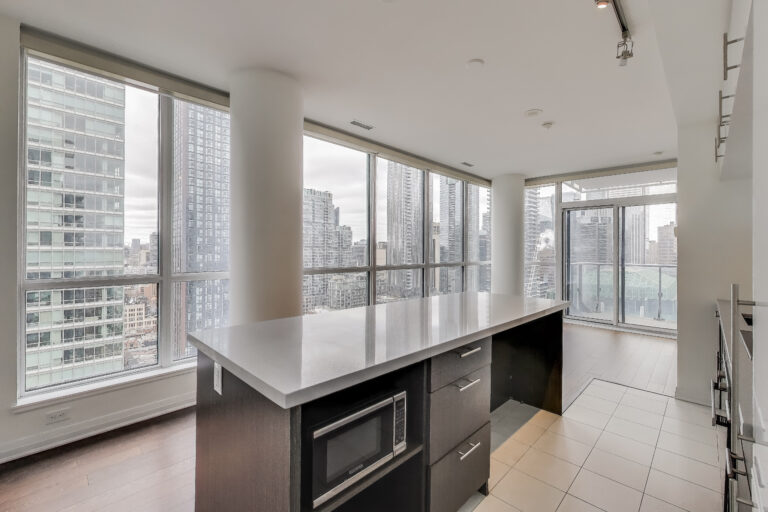
Real example: Clients bought a 2-bed+den in CityPlace for under $900K. Houses nearby? $2M. They saved over a million dollars and their kids walk to two new schools, a massive park, library, and community center.
Trade-off: No backyard. But $66K/year in savings funds university tuition and retirement.
Where to look: Liberty Village, CityPlace, Mimico, St. Clair West, Leslieville.
2. The Middle Ground (Townhouses)
While detached homes and condos dropped in value, townhouses in the 416 were UP 5.4% in 2024.
A townhouse in a good Toronto neighbourhood trades for 15-20% less than a semi on the same street. That’s $250K-$300K in savings.
Trade-off: You’re sharing walls, but you’re in the city near transit with neighbourhood character.
Where to look: Junction, Lambton, Scarborough Junction, Davenport.
3. The Mortgage Helper (Duplexes)
A legal duplex with a basement suite generating $2,200/month can add $200K to your buying power.
That family making $150K who qualifies for $975K? With rental income, they qualify for $1.4M. That’s the difference between a condo in the suburbs and a detached home in the city.
→ Watch my full duplex breakdown with mortgage broker Samantha
Trade-off: You’re a landlord. But you have a home in the city you can actually afford.
Where to look: East York, Bloordale, Oakwood Village, Fairbank.
4. Location Arbitrage (My Specialty)
Stop paying for “brand name” neighbourhoods. Buy the one next door.
My family’s example: We live in Briar Hill, west of the Allen. We’re 8 minutes from Forest Hill Village but paid millions less than Forest Hill proper.
Client examples I’ve executed:
- Oakwood Village instead of Wychwood (saved $500K-$700K)
- Humewood instead of Cedarvale (saved $600K)
- Cliffside instead of The Beaches (saved $800K+)
- Lambton instead of Kingsway (saved $400K+)
Same lifestyle. Different price tag.
Why Other Agents Don’t Tell You This
Three reasons:
- They don’t live this life. Many Toronto agents live in the suburbs themselves.
- They’re commission-focused. A $2M home pays better than a $900K condo.
- This takes work. School catchments, rental income calculations, neighbourhood arbitrage—that requires research.
I built my business helping families stay in Toronto because I’m a Toronto parent. And I refuse to accept that the only option is a 90-minute commute.
Next Steps
Watch the full video breakdown where I walk through all four strategies with real examples and show you the exact neighborhoods where these work right now:
→ Watch: How Toronto Families Afford to Stay in the City
Download the complete guide with real numbers, neighborhood recommendations, and trade-offs for each strategy:
→ Download The Urban Family Playbook (FREE)
Ready to make a move? Book a free 45-minute strategy call. We’ll look at your income, down payment, and I’ll show you exactly where the opportunities are right now:
Or text me: (365) 376-9485
One Last Thing
The families who stay in Toronto don’t regret it. Their kids have independence. They have community. They have a life that’s bigger than a big house.
The families who left because they thought they had to? They’re constantly driving back in for the life they used to have.
If Toronto is where you want to be, don’t let incomplete information make a million-dollar decision.
You have options. You just need the playbook.
Josh Jean-Baptiste
Real Estate Broker | SAGE Real Estate
📥 Download The Playbook | 📞 Book a Call | 💬 (365) 376-9485
Frequently Asked Questions
Can Toronto families afford to stay in the city on $150K-$175K household income?
Yes. Using duplex rental income strategies, families making $150K can qualify for $1M+ homes instead of the typical $900K limit—the difference between staying in Toronto versus moving to the suburbs.
What is location arbitrage in Toronto real estate?
Location arbitrage means buying in neighbourhoods adjacent to expensive areas to access the same amenities at lower prices. Examples: Oakwood Village instead of Wychwood (save $200K-$500K), Humewood instead of Cedarvale (save $300K+), Cliffside instead of The Beaches (save $500K+).
Are condos viable for families with kids in Toronto?
Yes. Families successfully raise kids in 2-3 bedroom condos by trading backyards for proximity to parks and schools. A family buying in CityPlace for under $900K (versus $2M for nearby houses) saves $66K/year—enough for university tuition or retirement savings.
How much does rental income increase my buying power?
A legal basement suite generating $2,200/month adds approximately $200K to your mortgage qualification. This turns a $975K approval into $1.4M+, especially effective in East York, Bloordale, Oakwood Village, and Fairbank.
What Toronto neighbourhoods offer the best value for families?
Condos: Liberty Village, CityPlace, Mimico, St. Clair West, Leslieville. Townhouses: Junction, Lambton, Scarborough Junction, Davenport. Duplexes: East York, Bloordale, Oakwood Village, Fairbank. Location Arbitrage: Oakwood Village, Humewood, Cliffside, Lambton, Briar Hill.
Why don’t most Toronto agents share these strategies?
Three reasons: (1) Many live in suburbs and don’t understand city living benefits, (2) $2M+ homes generate larger commissions than condos or townhouses, (3) Location arbitrage and rental income strategies require research most agents don’t invest in.
What’s the biggest mistake Toronto families make when house hunting?
Assuming they must choose between overpaying for a detached home in a “good school” neighbourhood or moving to the suburbs. Most don’t realize there are four distinct strategies that allow them to stay in Toronto on $150K-$300K income.
How did townhouses perform in Toronto’s 2024 real estate market?
Townhouses in the 416 were UP 5.4% while detached homes and condos dropped. They typically trade for 15-20% less than semis on the same street, offering $250K-$300K savings with private entrances and outdoor space.
What is The Urban Family Playbook?
A comprehensive guide by Toronto broker Josh Jean-Baptiste outlining four strategies for families earning $150K-$300K to afford living in Toronto: condos, townhouses, duplexes, and location arbitrage. Includes real numbers, neighborhoods, and trade-offs for each.
Who is Josh Jean-Baptiste?
A Toronto real estate broker specializing in Location Arbitrage who lives in Oakwood Village with his family. He’s helped over 50 families stay in Toronto using these strategies, focusing on informed decisions rather than maximizing commission.