The April 2026 TRREB numbers landed with a genuine contradiction at their centre: sales were up 7% year over year, new listings were down 9.3%, and yet prices continued to fall. In a typical market, tightening supply alongside rising demand produces price growth. The fact that it isn’t happening yet tells you something important about where we actually are in this cycle — and what that means for families trying to make a move in Toronto right now.
This post breaks down the April data through the Urban Family Playbook — the same four-pillar framework I use with every buyer client. I also have some thoughts on the broader immigration conversation happening in Toronto real estate circles online. I’ll touch on it briefly here, but I go deeper in the video — more on that at the end.
The April 2026 Numbers: What They’re Actually Saying
Here are the headline figures from the TRREB Market Watch:
- 5,946 sales — up 7% year over year
- 17,097 new listings — down 9.3% year over year
- 25,110 active listings — still elevated
- Average price: $1,051,969 — down 4.9% year over year
- HPI Composite: down 6.6% year over year
- Average days on market: 43 days — up 16% year over year
- Sale-to-list ratio: 98%
The first thing worth understanding is the gap between those two price measures. The HPI composite is falling faster than the average sale price — down 6.6% versus 4.9%. The HPI tracks a benchmark property with typical attributes and filters out the distortion caused by high-end sales inflating the average. When HPI falls harder than the average, it tells you the correction is concentrated in the middle of the market — the segment most families actually buy in. This is not an abstract statistical quirk. It’s where your clients live.
The second thing: that 25,110 active listings number deserves scrutiny. It’s not all fresh inventory. A meaningful portion of that figure is composed of properties that have been relisted multiple times — often with successive price reductions — after failing to sell on earlier attempts. The new supply coming to market is genuinely slowing, but the existing overhang of stale, repriced inventory continues to act as a ceiling on prices.
The third thing — and this is the most important for timing: 43 days on market, up 16% from last year. That gap between listing and offer is your negotiating window. It is the leverage buyers have right now that will not exist once this inventory clears.
One more signal worth holding onto: month over month, on a seasonally adjusted basis, the average price edged up and the HPI was flat. That is not a recovery. But it may be the deceleration of a decline. The floor forming quietly before anyone is ready to call it.
The broader market context adds nuance. The Bank of Canada overnight rate sits at 2.25%, significantly off the 5% peak — but the best 5-year fixed rate through a broker is still in the low 4s. Rate cuts have happened at the policy level. They haven’t fully transmitted to the mortgage products most buyers actually use. And they’re playing out against a softening economic backdrop: real GDP contracted 0.6% in Q4 2025, Toronto employment is down 0.3%, and geopolitical uncertainty is keeping a real segment of pent-up demand exactly that — pent up.
The sales-to-new-listings ratio (SNLR) is sitting at 34.6% — well into buyer’s market territory. For context, the 10-year April average SNLR is approximately 52%. There is still a meaningful gap to close before supply and demand dynamics begin pushing prices upward. The encouraging part: every single segment improved from April 2025 to April 2026. That kind of uniform movement across the whole market signals a genuine shift in the underlying supply-demand balance, not a statistical outlier.
Pillar 1: Urban Hack — Condos
Key figures:
- 416 condo average: $665,507 — down 6.4% YoY (~$45,000 in dollar terms)
- 416 condo sales: 1,054 | Total TRREB: 1,553
- Active condo listings in Toronto: 5,153
- Median list price (active): $598,000
- 25th percentile list price: $498,000
- Average DOM (active listings): 45 days
- Median SP/LP: 97%
The condo market is the softest segment in the city, and understanding why requires looking at three compounding forces rather than just the price headline.
The first is investor resale supply. A significant volume of pre-construction units purchased at 2021–22 pricing are closing right now. Many of those buyers are underwater or barely breaking even, and a substantial portion are listing immediately upon closing — adding new supply into an already-soft market.
The second is product mismatch. Much of what’s available was designed for investors rather than families. Sub-600 square foot, one-bedroom layouts with minimal storage don’t serve the urban family buyer, regardless of how attractive the price looks. The unit that doesn’t function for daily family life also tends not to resell well — a consideration that compounds the risk.
The third is carrying costs. Condo fees have risen while prices have fallen. When you run the full monthly cost stack — mortgage payment, maintenance fees, property tax — the effective monthly cost is often less attractive than the purchase price implies. Due diligence on the numbers behind the number is essential before any offer.
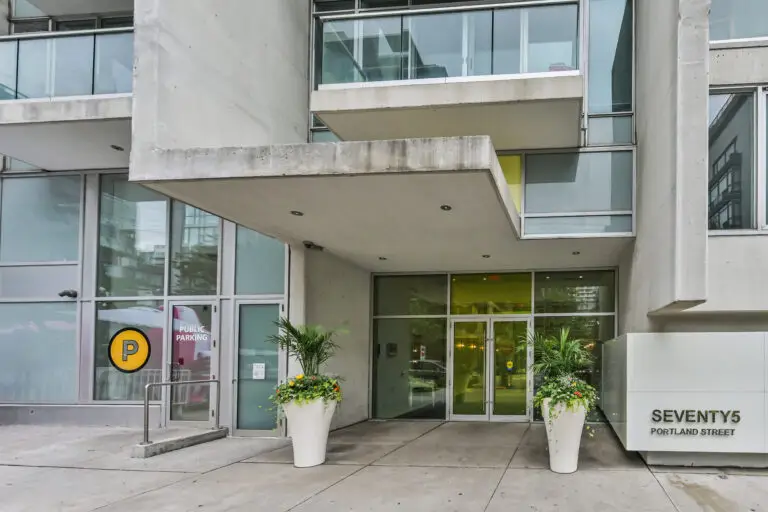
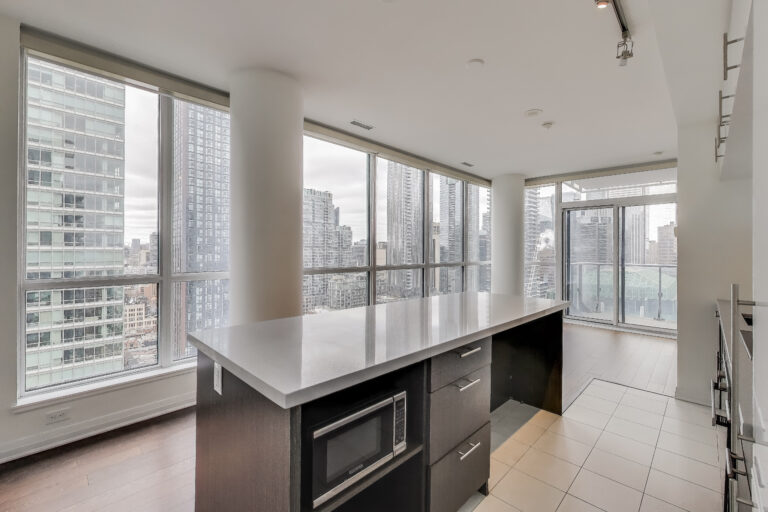
Where the Urban Hack thesis holds is in the selection. Sub-$700K in the 416 is genuinely accessible in a way it hasn’t been in years. The 25th percentile of active listings is sitting at $498,000 — sub-$500K inventory exists in this city right now. For urban families who are specific about what they need — two bedrooms, functional layout, amenities that substitute for private outdoor space, a building with healthy financials — there is real value available. The families who know the difference between buying a condo and buying the right condo are finding it.
Pillar 2: Middle Ground — Townhouses
Key figures:
- TRREB att/row average: $939,197
- 416 att/row average: $1,284,386
- Sale-to-list ratio (att/row): 100% — trading at ask
- TRREB att/row sales: 566
- Condo townhouse average: $704,847
In a market where almost every segment is giving ground, attached row and townhouses are holding. The sale-to-list ratio sitting at exactly 100% is the tell — these are not trading below ask the way condos are.
The reason is structural. Townhouses have no meaningful investor overhang. The people buying them are overwhelmingly end-users — families who need the square footage, the extra floor, and some form of outdoor space. When you remove the investor dynamic from a market segment, the pricing reflects genuine utility rather than speculative positioning, and it tends to be more resilient.
The honest constraint: in the West End corridors where urban families most want to live — Roncesvalles, Bloor West, Parkdale — a realistic price for an attached row house is still $1.1M to $1.3M or higher. That remains a qualification and downpayment challenge for a significant portion of households, even at current rates.
The Middle Ground pillar works best as the stability layer of the playbook. It’s not the entry-point deal and it’s not the distressed opportunity. It’s the rational, equity-building vehicle for families who’ve built capital somewhere — through a condo, a co-ownership arrangement, a family gift — and are ready to move into the product they actually want to hold for the next decade.
Pillar 3: Mortgage Helper — The Math
Key figures:
- 416 semi-detached average: $1,286,166 — up 1.5% YoY
- 20% down payment: $257,233
- Loan amount: ~$1,028,933
- Best 5-year fixed rate (broker): ~4.14%
- Monthly payment at 4.14%, 25-year am: ~$5,500
- Legal suite income (Toronto): $1,200–$1,500/month
- Effective carrying cost: $4,000–$4,300/month
- Stress test rate: 6.14%
The first thing worth noting about the semi-detached segment is that it’s one of the few in the 416 where the year-over-year price is positive — up 1.5%. While condos and detached homes have been softening, semis in the city are holding value. That’s end-user demand expressing itself clearly in the data. These are the properties families actually want to live in.
The mortgage helper thesis becomes most compelling when you run the numbers in full. At $1,286,166 with 20% down, financing just over a million at 4.14% on a 25-year amortization produces a monthly payment of approximately $5,500. A legally permitted basement suite in Toronto currently rents for $1,200–$1,500 per month. That income brings the effective monthly carrying cost to between $4,000 and $4,300 — meaningfully below what a family would pay to rent equivalent above-grade space in most of the neighbourhoods we’re discussing.
Two things to know before you walk into a bank with this thesis. First: rental income from a legal suite, or a legal non-conforming suite, can count toward your qualifying income with most lenders. The critical word is legal. If the suite is properly permitted and above-board, your mortgage broker can use that income to strengthen your qualification position. Sort this out before you start searching, not after you find the property. Second: the stress test applies at your contract rate plus 2% — so 6.14% in this scenario. Make sure the numbers work at that rate before you fall in love with the deal.
The tactical opportunity specific to this market: with sellers sitting at 43 days on market and motivated, there is genuine room to negotiate suite improvements into the deal itself. A separate entrance finishing, egress windows, an electrical panel upgrade — these are condition-of-sale conversations that only happen in a buyer’s market. That window closes the moment there are competing offers on the table.
Pillar 4: Location Arbitrage — The West End Gap
Key figures (detached, April 2026):
- W01 (Roncesvalles / Parkdale / Little Portugal): $1,865,244
- W04 (Mount Dennis / Keelesdale / Rockcliffe-Smythe): $967,686
- Gap: ~$897,000
Location Arbitrage in the Urban Family Playbook has never been about leaving the city for Hamilton or Durham. It’s about the gap between two West End neighbourhoods that are separated by ten minutes and approximately a decade of momentum.
On a detached home, W01 — Roncesvalles, Parkdale, Little Portugal — averages $1,865,244. These are established corridors. You’re paying for the culture, the walkability, the transit access, the restaurant strip, the schools, the full infrastructure of a mature neighbourhood. That price reflects what the neighbourhood is today.
W04 — Mount Dennis, Keelesdale, Rockcliffe-Smythe — averages $967,686 on a detached home. The same product category. Similar housing stock: semi-detached brick, decent lot sizes, the bones that people are paying nearly double for ten minutes south and east. The gap between these two numbers is just under $900,000.
The Location Arbitrage thesis holds that gaps like this close — not because of speculation, but because of infrastructure. And the infrastructure in this corridor is already moving. The Eglinton Crosstown is running. Keelesdale station is operational. That area now has a direct connection into the core of the city that didn’t exist before. The Stockyards district has been gentrifying from the east for years and continues to push westward. Humber River trail access adds a quality-of-life dimension that matters to families.
The families being priced out of Roncy aren’t disappearing. They’re discovering Weston Road south of Lawrence, the Rockcliffe-Smythe streets, the blocks just west of Keele. This exact pattern played out in Oakwood Village, in Fairbank, in Davenport. Infrastructure arrives first. Amenities follow. Pricing catches up last.
The honest caveat: this is a 5–7 year thesis. These pockets are less liquid than the core. The exit when you need one takes longer. This works for families buying a home they genuinely want to live in — not a short-term trade. For the family with that profile and that horizon, an $897,000 gap on the same product is the entire point of the playbook.
A Note on the Immigration Conversation
There’s a broader conversation happening online right now — across real estate and finance accounts — that uses the Auditor General’s recent report on Canada’s international student program as a springboard for claims about immigration and housing that I think deserve a real, data-grounded pushback.
I go into this at length in the video, but the short version: the enforcement failures in the AG report are real and should be fixed. What the data doesn’t support is the leap that immigration itself is the primary cause of Toronto’s housing affordability crisis. The numbers point elsewhere — to monetary policy, domestic investor behaviour, and decades of inadequate supply. Someone has to say it, and I did.
Watch the full video for my complete take — including the market data that puts the argument in context.
The Bottom Line on April 2026
The market is sending a clear signal for those who know how to read it: the pace of price decline is slowing, supply is tightening from the top, and sellers are more motivated than they’ve been in years. The families sitting on the sidelines waiting for certainty are waiting through some of the best negotiating conditions this market has offered since the correction began.
Which of the four pillars applies to your situation? That’s the question the playbook is built to answer.
[Download the Urban Family Playbook — Free Guide]
[Auditor General Report — International Student Program Reforms]
All market statistics sourced from TRREB Market Watch, April 2026 and Habistat. Mortgage calculations based on a 4.14% 5-year fixed rate, 25-year amortization, 20% down payment. Rate sourced from Ratehub, May 2026. Suite income estimates based on current Toronto rental market conditions. Always consult a licensed mortgage professional before making financing decisions.
Josh Jean-Baptiste is a broker at SAGE Real Estate in Toronto, specializing in urban family buyers. realestateundertheradar.ca